Tag Archives: MCAT

Psyching Up For The MCAT

Take a deep breath. Clear your mind. Close your eyes.

Now… imagine yourself. See yourself standing. Focus vividly.

Now… imagine the MCAT. Close your eyes, and create a vivid image of the MCAT. Imagine the time, effort and energy you have and will expend to prepare for the MCAT.

Did you see yourself as “bigger” than the MCAT, or “smaller?”

This exercise gives you telling insight into how you see yourself and your relationship to the MCAT. If you see the MCAT as “big,” then your relationship with the MCAT may be characterized by overwhelm, anxiety, worry and doubt.

If you see the MCAT as “small” or “smaller than me,” then this reflects your confidence, and your scores will likely reflect this confidence.

Now do this:

Imagine yourself standing next to the MCAT. Expand your image of yourself until you are much, much smaller than the MCAT. See the MCAT as a giant mountain that seems impossible to climb.

Now imagine yourself towering over the MCAT. Create your image of yourself as a giant, standing hundreds of feet tall, and the MCAT is smaller than an ant, insignificant.

Experience the difference in your relationship with the MCAT. Take note of how you feel as you shift your perspective. Every time you study for the MCAT, every time you start a practice test, take 30 seconds and imagine yourself being bigger than the MCAT. Stand up tall and grow yourself taller. Feel the change in your relationship with the MCAT, and take note of the dominance and superiority you experience over it. Read my rant on test prep, and use the “Open Source MCAT Course” as a great tool to supplement your MCAT preparation.

Write a comment below with your feedback on MCAT mindset. I’m looking forward to reading them!

-DonO

3 Medical School Admissions Assumptions That Can Screw You Over

Like so many things in life, medical school admissions is filled with assumptions and myths that are 1) surprising, 2) not true, and, if you rely on them, 3) can get you into a heap of trouble. Here are three little-known medical school admissions assumptions. All of these have to do with the MCAT.

Assumption #1: You have to have your MCAT scores before you can apply.

Wrong. Your primary application is independent of your MCAT scores, so you can submit your primary application as soon as it is ready. However, you need to have both the primary application and the MCAT score to the medical school admissions office in order for your application to be considered. (You’ll need other documents, too).

Assumption #2: It’s a good idea to take the MCAT regardless of your practice scores, just to get the experience.

Wrong. Too many students make this mistake. I would never recommend you take the MCAT just to practice. It’s much better to take free practice tests at home, instead. Further, if your scores on practice tests are in the mid-20s, it’s highly unlikely your MCAT score will jump into the low 30s in just a few days.

Assumption #3: The MCAT is the most important part of the application.

Not so. Medical schools will evaluate your entire application. Like the parts to a car’s engine, all of the pieces are intricately connected; you engine won’t start without the battery, but that doesn’t make it the most important part of the engine.

I’ve got more tips and advice on my article called “Medical School Admissions: Unicorns and Other Mythical Creatures” over at my blog at INQUARTA.com. Check it out now!

– DonO

Kingdom Monera


Which of the following is considered to be the defining characteristic of organisms in the Kingdom Monera?

View Results

Loading ... Loading ...


Subscribe below to receive the MCAT Question of the Day delivered straight to your inbox every morning.


Radioactive Isotopes


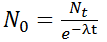
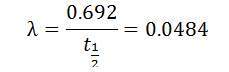
Radioactive isotopes can sometimes emit or radiation, which can be very dangerous to people. However, they can be very useful for medical purposes, so long as the proper quantity is used. If the safety standard for a radioactive injection of phosphorus requires that less than 0.01g remains in the body after 90 days after the injection, what is the maximum initial dose? The half-life of phosphorous is 14.29 days.
View Results

Loading ... Loading ...


Subscribe below to receive the MCAT Question of the Day delivered straight to your inbox every morning.


X Marks The Spot


An aqueous solution of a metal nitrate (“X”NO3) forms a precipitate when magnesium sulfate (MgSO4) is added. However, a separate sample of the metal nitrate does not form any precipitate when mixed with hydrogen perchlorate (HClO4). What could this metal “X” be?

View Results

Loading ... Loading ...


Subscribe below to receive the MCAT Question of the Day delivered straight to your inbox every morning.


Reading Comprehension and the Future of the MCAT

It’s no surprise that reading comprehension is one of my favorite subjects. As a past MCAT instructor and co-author of materials about reading comprehension for the MCAT, I love the whole aspect of figuring out the puzzle in a verbal reasoning passage.

Now that MCAT 2015 is officially going to include social sciences and psychology content, it’s apparent that there’s too much content to make everything a prereq for medical school admissions. So if you’re thinking you might take the MCAT in a couple years, read on.

Premed Prereqs are A-changin’

The change in MCAT content implies a significant addition to the list of prerequisites for medical school admissions. The trouble is that students are already overloaded on their existing academic path. Adding-in more sociology and more psychology doesn’t sound like a winning solution. So I doubt that med schools will make this part of the premedical requirements. It’s enough that the MCAT will test these topics, making it a de facto requirement.

Verbal Techniques Widely Applied

I expect you’ll see innumerable books, courses, and online goodness all geared toward guiding you to better understand the upcoming “content.”

Don’t let yourself get too carried away, though. The nature of standardized tests, which I wrote about previously on this site, restricts test writers to a few tried-and-true approaches. None of this will change when the new subjects come online; if the process of elimination works on bio questions, and works on verbal questions, then it will also work on psych questions.

Bottom Line is Cognitive

The main thing the MCAT wants to know is this: Can you read a body of information, form your own, independent interpretation of that information, and then report the author’s perspective, bias and possible logical errors?

I write more about this on my blog … take a look.

Don Osborne is a contributing author to Princeton Review’s Hyperlearning MCAT Course. Don created the original Verbal Accelerator program and is a contributor to the latest “Cracking the MCAT” book from Princeton Review. Follow Don on Facebook to read his advice and recommendations to improve your chances of medical school admissions.

Not Part of the Respiratory System


Which of the following is NOT considered part of the respiratory system?

View Results

Loading ... Loading ...


Subscribe below to receive the MCAT Question of the Day delivered straight to your inbox every morning.


Airplanes


A baby can easily surpass 100 decibels. Which of the following part of a sound wave is increased to create such a loud cry?

View Results

Loading ... Loading ...


Subscribe below to receive the MCAT Question of the Day delivered straight to your inbox every morning.


DNA Delivery Methods


In gene therapy, which of these non-viral DNA delivery methods requires endocytosis?

View Results

Loading ... Loading ...


Subscribe below to receive the MCAT Question of the Day delivered straight to your inbox every morning.


Air Dissolved in Water


A sealed vessel holds air and liquid water. Which of the following conditions would greatly increase the amount of air dissolved into the water?

View Results

Loading ... Loading ...


Subscribe below to receive the MCAT Question of the Day delivered straight to your inbox every morning.


